Retinaldehyde vs Retinol — Here's What Your Skin Actually Needs
If you've ever used a retinol and ended up with red, peeling, irritated skin that looked worse than when you started, you're not alone. And it wasn't your fault.
Most women assume that reaction means their skin "can't handle" Vitamin A. So they stop. They go back to their gentle moisturizer and quietly give up on one of the most researched, most effective ingredients in skincare.
But here's what nobody told you: your skin wasn't rejecting Vitamin A. It was rejecting the form of it.
Let's Talk About How Vitamin A Actually Works
Vitamin A doesn't just land on your skin and get to work. It has to be converted first.
Here's the conversion chain your skin goes through:
Retinol → Retinaldehyde → Retinoic Acid
Retinoic acid is the active form — the one that actually does the work. Stimulates collagen. Speeds up cell turnover. Smooths texture. Improves tone. The good stuff.
The problem with retinol is that it takes two conversion steps to get there. That's two opportunities for irritation, two opportunities for inefficiency, and two reasons why so many women experience that classic retinol burn without seeing the results they were promised.
Retinaldehyde — retinal — is one step closer. One conversion, not two. That means it works faster, more effectively, and with significantly less irritation along the way.
It's not a gentler version of retinol. It's a better one.
Why Retinaldehyde Doesn't Get Talked About More
Honestly? Cost and complexity.
Retinaldehyde is more expensive to formulate with. It's less stable than retinol, which means it requires more sophisticated delivery technology to actually work. Most brands don't want to deal with that. It's easier and cheaper to slap retinol on the label and call it anti-aging.
But the brands that do it right? The results are genuinely different.
What to Look for in a Retinaldehyde Product
Not all retinaldehyde formulas are created equal. Because it's unstable, how it's delivered matters as much as the ingredient itself.
The gold standard is liposomal delivery — encapsulating the retinaldehyde in a lipid layer that protects it until it reaches the skin, then releases it gradually. This is what separates a retinaldehyde product that actually works from one that oxidizes before it even gets to do its job.
You also want to see barrier supporting ingredients alongside it. Vitamin A is doing active work on your skin — you want a formula that's repairing and protecting at the same time, not just pushing the ingredient in and leaving your barrier to fend for itself.
Who Should Be Using Retinaldehyde
Honestly, most women who are already thinking about their skin. But especially:
If you've tried retinol and had a bad reaction. If you're in your 30s or 40s and starting to think seriously about collagen and aging. If you have dull, textured, or sun damaged skin that isn't responding to what you're currently using. If you want clinical level results without the clinical level irritation.
This is not a "start slow and hope for the best" ingredient. When it's formulated correctly, you can use it consistently and actually see results without the weeks of peeling skin that make you question every decision you've ever made.
Find Your Pathway: Which Vitamin A Is Right for You?
Not every skin is starting from the same place. Here are the three pathways I recommend depending on where you are right now.
🌿 Pathway 1 — Calm: For Sensitive & Reactive Skin
Best for: Skin that flushes easily, reacts to most actives, or has never tolerated Vitamin A before.
If your skin gets irritated at the mention of retinol, the issue wasn't Vitamin A — it was the form and delivery. Calm Retinal is formulated specifically for reactive skin types. It delivers retinaldehyde in a soothing, barrier-first base that works with your skin's biology instead of against it. Effective. Gentle. Non-negotiable for sensitive skin.
⚡ Pathway 2 — Correct MD: For Preventative & Active Anti-Aging
Best for: Women in their 30s–40s thinking seriously about collagen, skin tone, and long-term prevention.
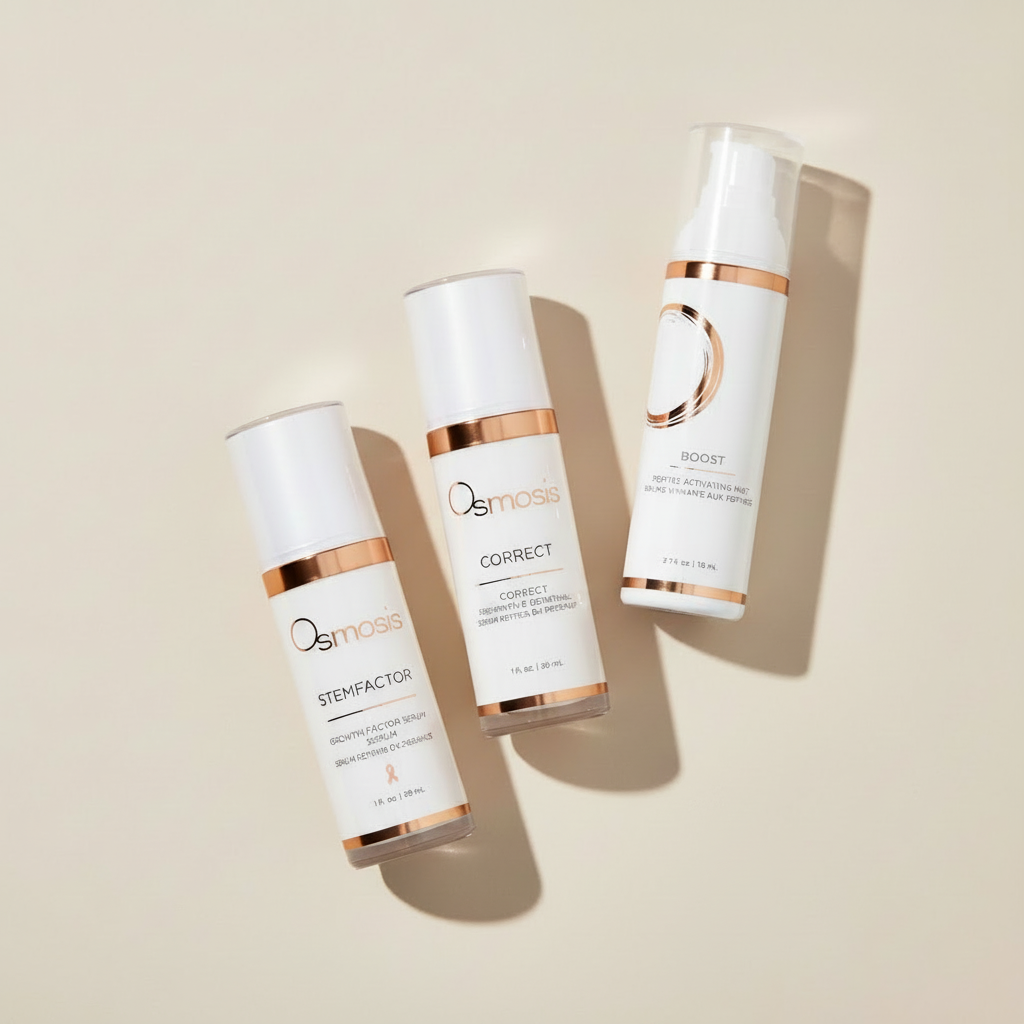
Correct MD is the retinaldehyde product I point most women to. It uses pharmaceutical grade liposomal retinaldehyde with targeted nutrients that support deep penetration and long term repair — without compromising your barrier. Sun safe and gentle enough for twice daily use. Morning and night. No sun sensitivity warnings, no easing in slowly. Just consistent, clinical-strength Vitamin A done the right way.

🔬 Pathway 3 — Renew MD: For Advanced Repair & Highest-Level Results
Best for: Women ready for the deepest level of cellular renewal — significant texture, sun damage, deeper lines, or skin that's ready to go further.
Renew MD is the highest-level Vitamin A offering in the Osmosis lineup. If you've been using Vitamin A consistently and want to take your results further, or if your skin concerns are more advanced and you're ready to commit to serious repair, this is the next step. Formulated for maximum cellular communication and deep renewal — this is clinical skincare working at its full potential.
The Bottom Line
Retinol isn't bad. But retinaldehyde is better. And if you've been avoiding Vitamin A because of a bad experience, it might be exactly what your skin has been waiting for.
The question isn't whether to use Vitamin A — it's which pathway is right for where your skin is right now.
Support the biology. The results follow.