The Best Homemade Mac & Cheese (Without the Junk)
As a crunchy mom, I'm always looking for ways to give my kids the foods they love without all the weird store-bought ingredients.
Because why does a simple box of mac and cheese need:
- Artificial dyes
- Seed oils
- Preservatives
- Powdered cheese
- Natural flavors
- Enriched flour
- Ingredients I can barely pronounce
It's one of those foods kids love, but the ingredient list on the back makes me cringe. So I started making it from scratch.
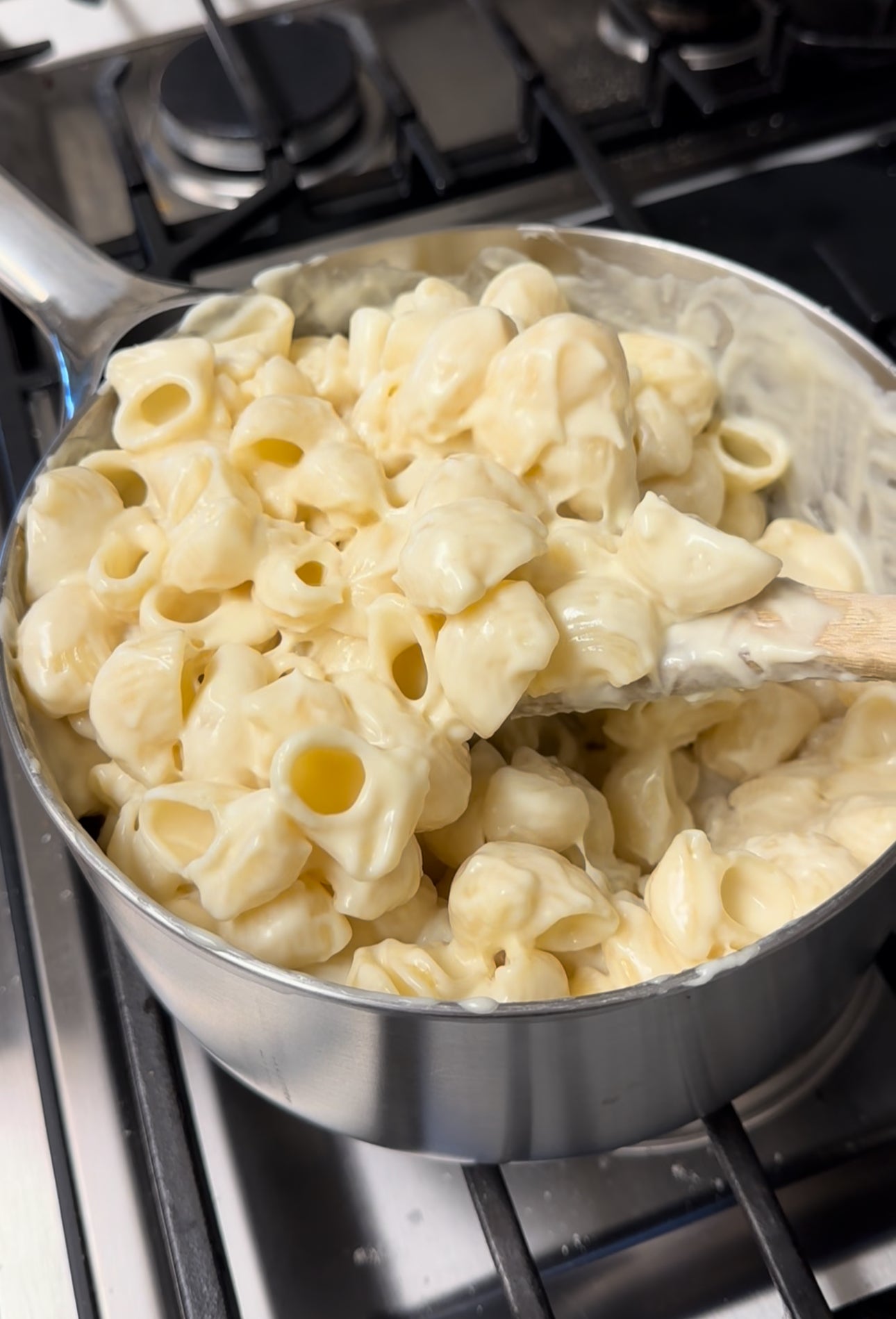
And this version? It's creamy, rich, comforting, kid-approved, and made with real ingredients that actually nourish your family without making you feel guilty for serving it. No powdered packets. No fluorescent orange powder. Just real raw cheese, quality dairy, and a homemade sauce that honestly tastes better than the box ever did.
Why Is Store-Bought Mac and Cheese Bad for Kids?
Conventional boxed mac and cheese is typically made with enriched flour, powdered processed cheese, artificial dyes like Yellow 5 and Yellow 6, seed oils, and preservatives. For families focused on clean eating and real food, these ultra-processed ingredients are a dealbreaker. My kids still want comfort food — I just want to make it with ingredients I actually feel good about serving.
Instead of ultra-processed ingredients, this recipe uses:
- Grass-fed butter
- Real raw shredded cheese
- A2 whole milk
- Organic heavy cream
- Non-fortified pasta
- Simple pantry ingredients
Same comfort. Better ingredients.
Ingredients
- 1 lb organic, non-fortified pasta
- 3 tbsp grass-fed butter
- 3 tbsp organic unbleached flour
- 2 cups A2 whole milk (preferably non-homogenized)
- 1 cup organic heavy cream
- 1.5 cups grass-fed medium white cheddar, freshly shredded
- 1.5 cups grass-fed sharp white cheddar, freshly shredded
- 0.5 tsp organic garlic powder
- 0.5 tsp organic onion powder
- Mineral-rich salt to taste
Optional: 1 to 2 tbsp grass-fed cream cheese for extra creaminess


How Do You Make Mac and Cheese Without Processed Ingredients?
The key is building a real bechamel sauce from scratch using grass-fed butter, unbleached flour, and quality dairy, then melting in freshly shredded raw cheddar. Here is exactly how to do it:
1: Cook the Pasta
Bring salted water to a boil and cook pasta until just al dente. Drain and set aside.
2: Make the Sauce Base
In a large skillet or pot, melt the butter over medium heat. Whisk in the flour and cook for 1 to 2 minutes until lightly golden. Slowly whisk in the milk and heavy cream until smooth. Let the sauce simmer for about 3 to 5 minutes, whisking often, until slightly thickened.
3: Add Seasoning
Stir in garlic powder, onion powder, and salt to taste.
4: Add the Cheese
Turn the heat to low. Slowly add the shredded cheese in handfuls, stirring constantly until smooth and creamy. If using cream cheese, stir it in here.
5: Combine
Add the cooked pasta and stir until fully coated in the cheese sauce.

What Is the Best Cheese for Homemade Mac and Cheese?
Freshly shredded grass-fed white cheddar is the gold standard. A combination of medium and sharp white cheddar gives you the best balance of creaminess and flavor depth. Avoid pre-shredded cheese — it contains anti-caking agents and fillers that affect both texture and melt quality. Fresh-shredded melts so much better.
Why A2 Milk for Mac and Cheese?
Many people find A2 dairy easier to digest than conventional milk. A2 milk comes from cows that naturally produce only the A2 beta-casein protein, which some research suggests is gentler on the digestive system. I personally prefer using minimally processed dairy whenever possible, and A2 whole milk gives this sauce a rich, clean flavor.
Why Non-Fortified Pasta?
Most conventional pasta is enriched with synthetic vitamins added back after processing. I prefer sourcing pasta made with simpler ingredients and traditional processing methods when possible — a small swap that aligns with a real food philosophy.
What You Feed Your Family Shows Up on Their Skin
As a holistic esthetician, I believe that what we put into our bodies is just as important as what we put on our skin. Clean, nutrient-dense food — especially quality animal proteins, healthy fats, and mineral-rich ingredients — directly supports skin health from the inside out.
When I feed my kids grass-fed dairy, real cheese, and clean ingredients, I'm not just nourishing their bodies. I'm supporting their skin, their gut, and their long-term health. The same philosophy that guides my skincare recommendations guides what I put on the table.
Because glowing, healthy skin starts long before you reach for a serum.
Ready to support your skin from the outside too? Explore The Advanced Minimalist Routine — a curated, biology-based approach to skincare that works with your skin, not against it.